Most of the serious findings in web application assessments are not exotic. They are broken access control, a forgotten debug endpoint, a token that can be forged, or two small bugs that become one big one when chained. Reading about them is a start. Learning to find them takes practice on real applications, and you cannot practise on systems you do not own.
That is the gap WebVerse Pro sets out to fill: a training platform built around realistic web hacking labs.
What it is
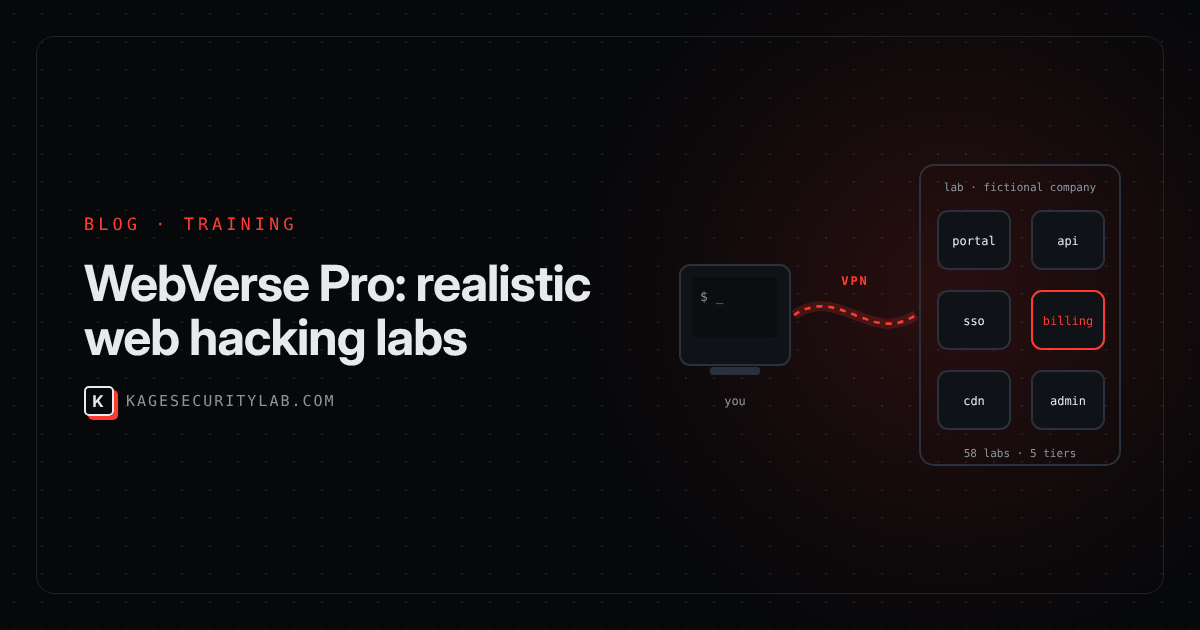
Each lab is a complete fictional company: several services, real-looking features, and vulnerabilities you have to find and chain together, the way an actual assessment works. Starting a lab provisions the whole stack behind a private VPN.
| Labs | 58 full-scale labs across 5 difficulty tiers (November 2026) |
| Challenges | Single-vulnerability challenges, one flag and one bug class each, for quick focused practice |
| Lab brief | The scenario, architecture and skills each lab exercises, shown before you start |
| Realism | Labs include features that are not vulnerable, so you have to separate signal from noise |
| Progress | XP, ranks and solve history |
| Learning guides | Free practitioner guides on topics from SQL injection and SSRF to JWT, OAuth and GraphQL |
| Teams | A separate offering for companies training several people |
There is a free tier to start with, and paid plans that unlock the full lab and challenge library. Check the WebVerse site for current plans and prices.
What stands out
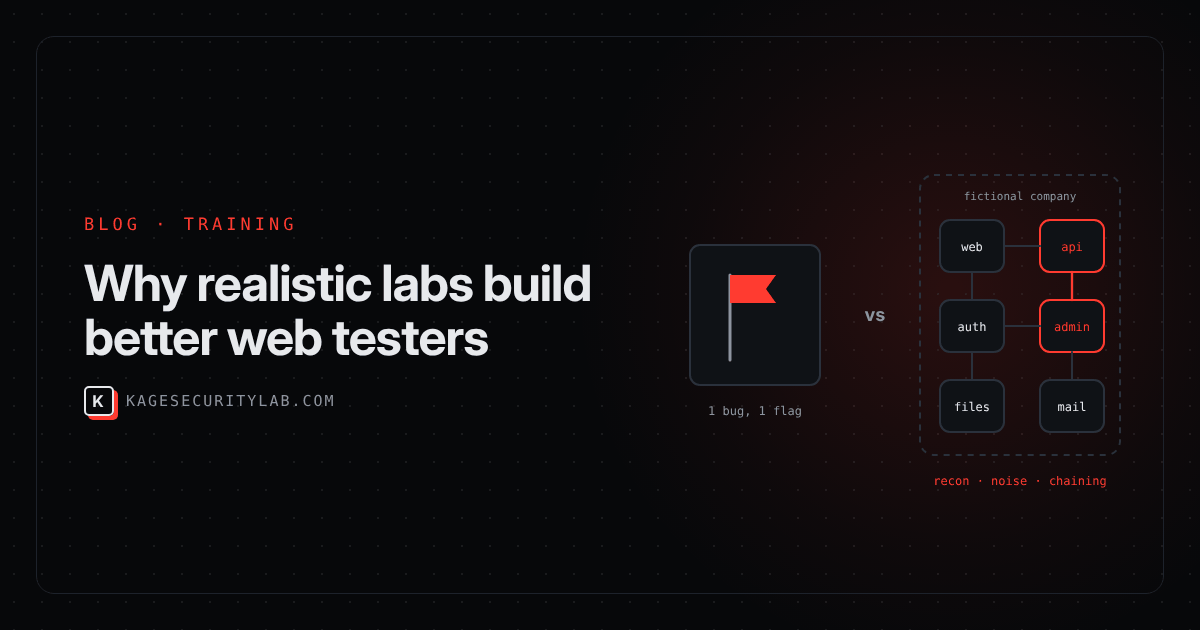
- It trains the skill real work needs. Isolated challenges teach one bug at a time. Real applications reward recon, patience and chaining, and that is what the full labs are built for. We explain the difference in Why realistic labs build better web testers.
- Noise is part of the design. Because not every feature is vulnerable, you practise deciding where to spend your time, which is most of the job on a real engagement.
- It works for defenders too. Developers and blue teamers who have exploited an IDOR or forged a token once never review that code, or triage that alert, the same way again.
- You can start for free, with no card, on the free labs, challenges and guides.
Who it suits
- Aspiring web testers moving on from single-flag CTFs who want something closer to client work.
- Working pentesters who want reps on business-logic and chained bugs between engagements.
- Developers and AppSec engineers who want to see their own bug classes from the attacker's side.
- SOC analysts who want to understand what a web attack looks like before it reaches their logs.
Getting the most out of it
- Read the free guide for one bug class you meet at work, then solve a matching challenge.
- Move on to a full lab without knowing where the bug is. Map the application first: roles, endpoints, data flows.
- Write up what you found as if it were a client report: title, impact, steps, fix. That last step is where the learning sticks.
- Then switch sides: how would you have prevented and detected it?
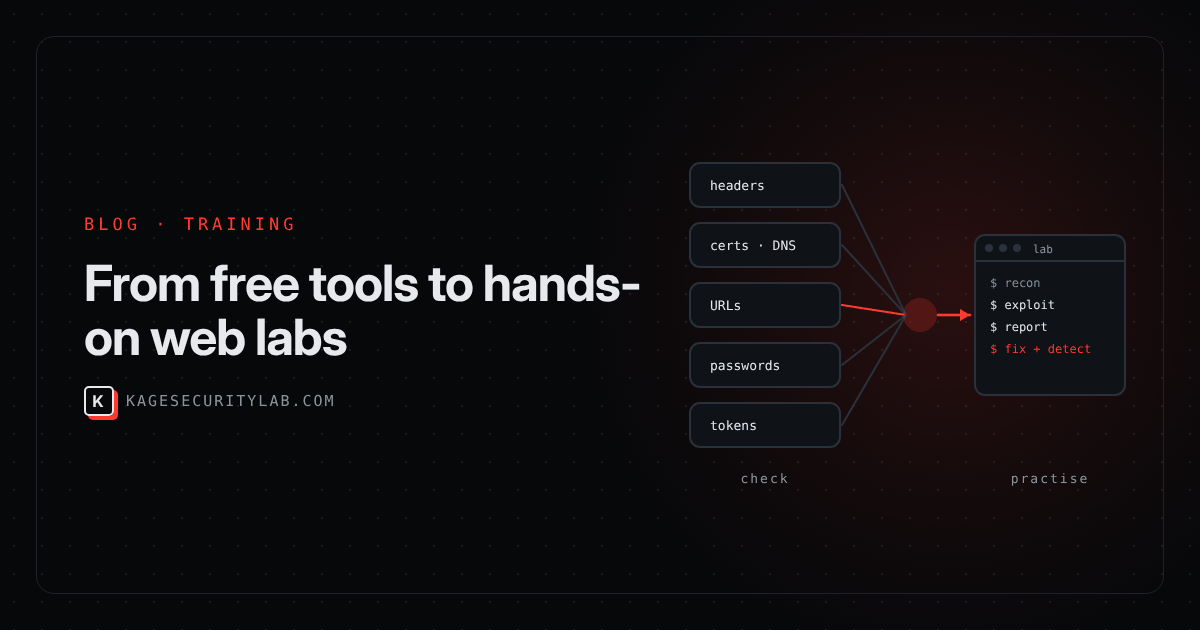
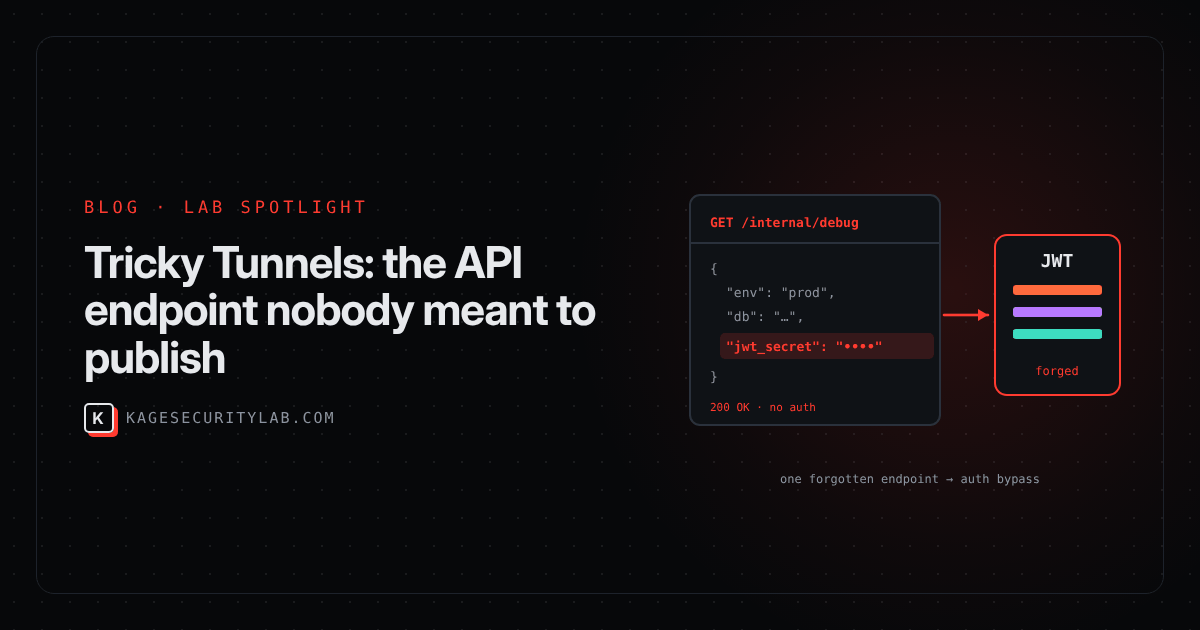
For a structured way to pair these labs with our free tools, see From our free tools to hands-on labs. For one lab looked at in detail, see our spotlight on Tricky Tunnels.
Want your own applications tested, or your developers and SOC trained on real attack paths? Talk to us about a penetration test or a team session.