Ask anyone who has moved from capture-the-flag challenges to paid web application testing what changed, and the answer is usually the same: nothing tells you where the bug is. There is no single input box, no hint in the title, no guarantee that a vulnerability exists at all. That gap is what this post is about.
What a real assessment looks like
A typical web engagement for a client involves:
- Scope and recon: several hostnames, an API, a mobile backend, an admin panel someone forgot, third-party login.
- Many features, most of them fine: dozens of pages and endpoints, and the job is deciding where to spend your time.
- Business logic: the worst flaws are often "a normal user can approve their own refund", not a textbook payload.
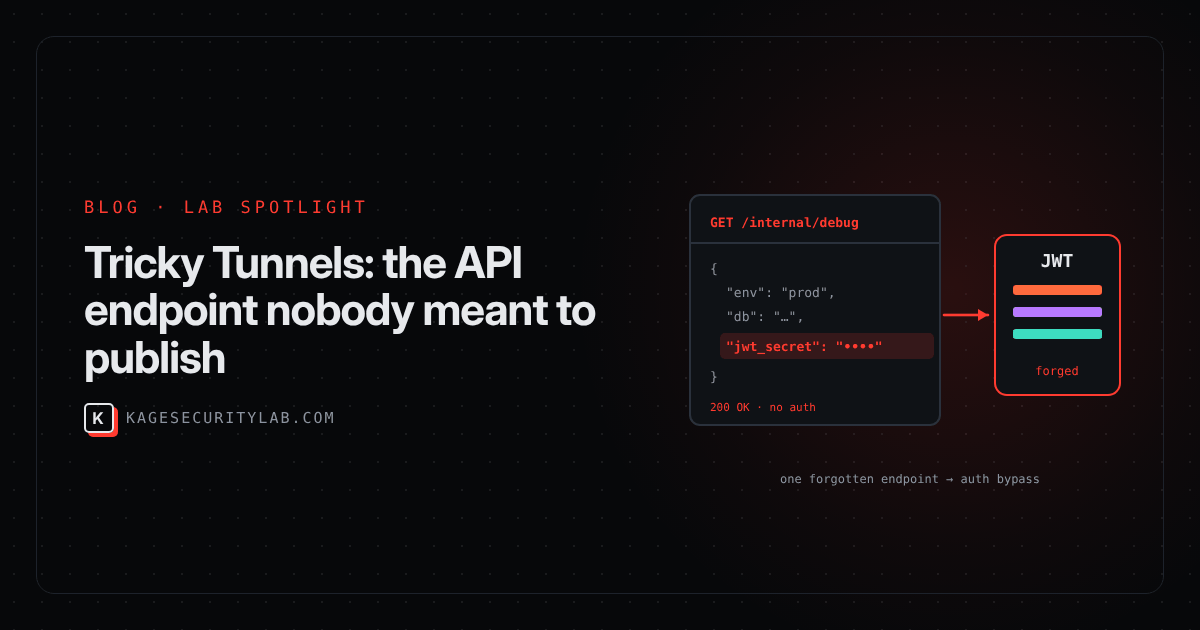
- Chaining: a low-severity information leak plus a weak token plus a missing authorisation check becomes account takeover.
- Evidence and reporting: the client needs impact, reproduction steps and a fix, written so a developer can act on it.
What isolated challenges are good for
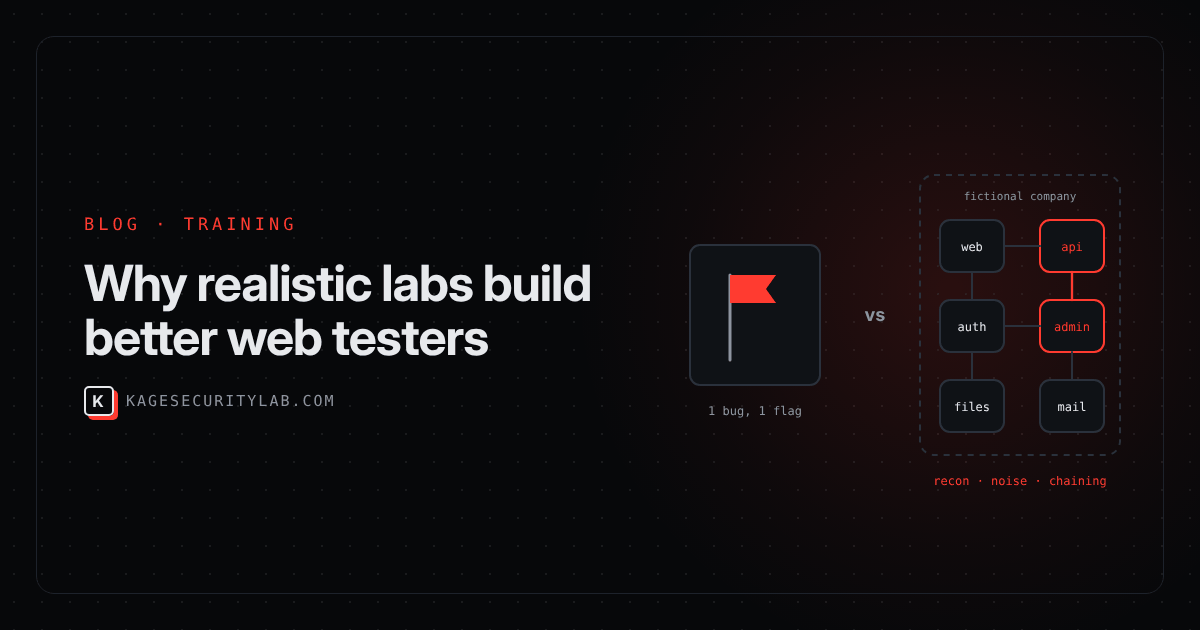
Single-vulnerability challenges are excellent at one thing: learning a bug class quickly. One flag, one vulnerability, fast feedback. When you are learning what server-side template injection or a JWT algorithm-confusion bug even is, that focus is exactly right.
Their limit is that the hard part of real work, finding the bug among everything that is not a bug, is already done for you.
What full-environment labs add
| Isolated challenge | Full-environment lab | |
|---|---|---|
| Teaches | What a bug class is | How to find and combine bugs |
| Recon needed | Little or none | Essential |
| Noise | None: the bug is the point | Plenty of features that are not vulnerable |
| Chaining | Rare | Often required |
| Feels like | An exercise | An engagement |
| Time | Minutes | Hours |
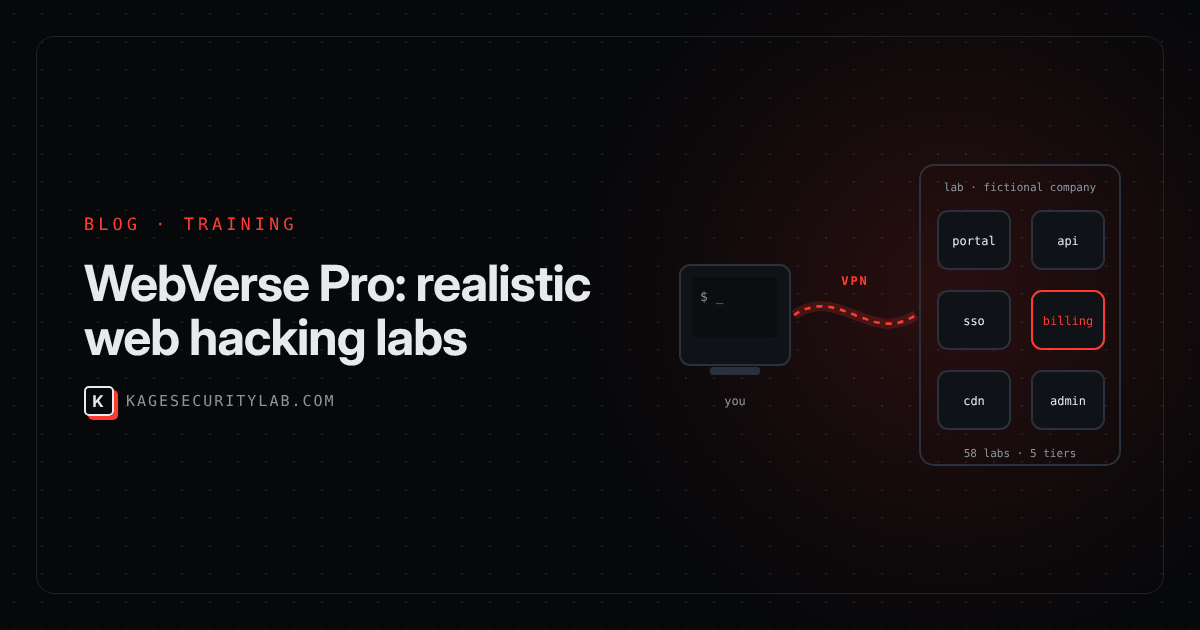
Platforms such as WebVerse Pro build labs as complete fictional companies: several services behind a private VPN, a brief with the scenario and architecture, and deliberately non-vulnerable features so you have to work out what matters. It also has single-vulnerability challenges, which makes it a good place to practise the full loop below. For free, structured theory, PortSwigger's Web Security Academy is another resource we recommend.
A training loop that works
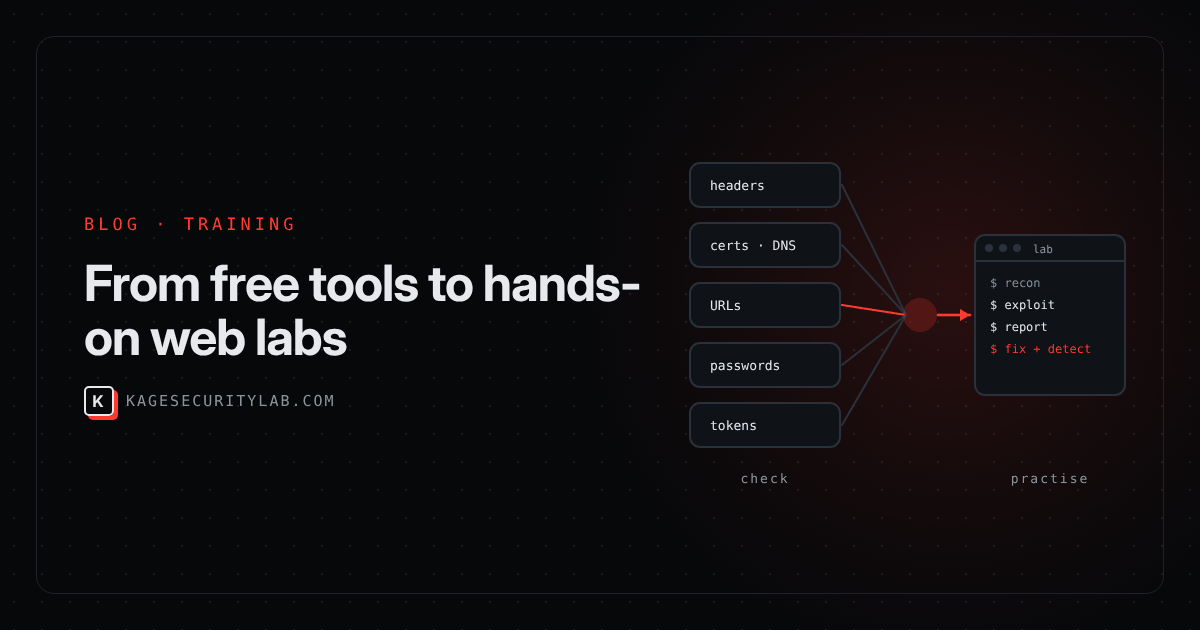
- Learn the concept. Read a guide on one bug class: what it is, why it happens, how it is fixed.
- Prove it in isolation. Solve one or two single-bug challenges until the mechanics are automatic.
- Find it in the wild. Start a full lab without knowing where the bug is. Map the application first: roles, endpoints, data flows.
- Write the report. Title, impact, steps, fix. If you cannot explain the fix, go back to step 1.
- Switch sides. Ask how you would have prevented and detected it: which log, which alert, which code review question.
Repeat with a new bug class each week. Step 5 is what turns attack practice into better code and better detection, and it is the part most people skip.
For teams
The same loop works for developer teams. A two-hour session where developers attack a realistic app, then fix the same flaw in their own codebase, does more for secure coding than a slide deck.
Want to see where your own applications stand? Our penetration testing and red team engagements test the way real attackers work, and every finding comes with a fix. Talk to an analyst.